
How To: Passivation for Stainless Steel Vessels

Rapid data center expansion and modern HVAC demands have led more engineers and specifiers to choose stainless steel vessels for their systems. But what exactly is passivation, and what makes a passivated stainless steel vessel desirable over traditional carbon steel?
What is Passivation?
Passivation is a multi-step chemical finishing process performed after components are manufactured, welded, and assembled. Its primary goal is to maximize the steel’s natural corrosion resistance.
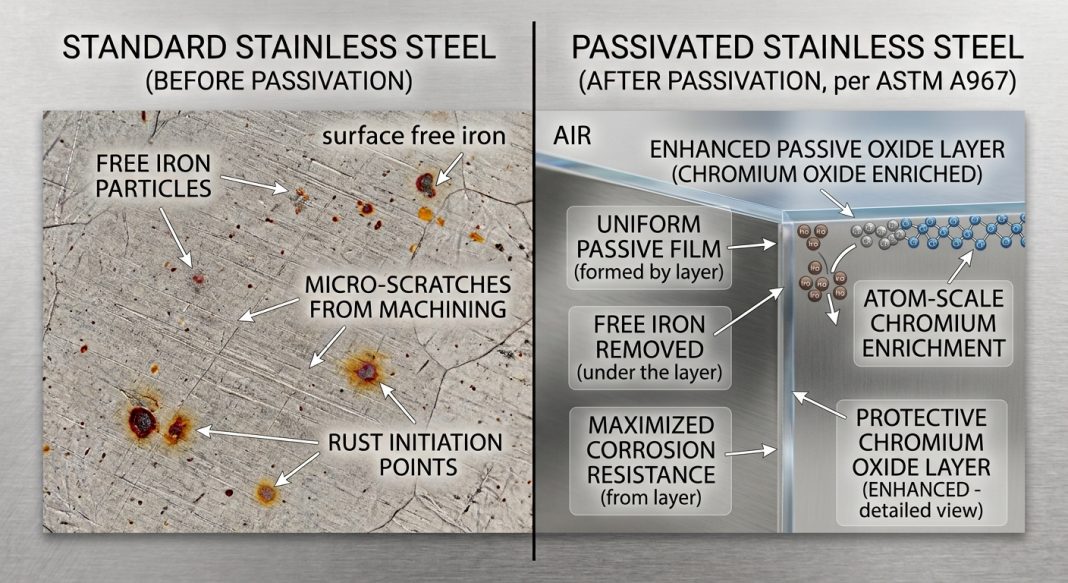
There is a common misconception that passivation physically fills surface flaws or mechanically alters the strength of the metal. In reality, it works chemically: during fabrication processes like cutting, machining, and welding, microscopic traces of free iron (tramp metal) from tooling get embedded into the steel’s surface. If left untreated, these iron particles react with air and moisture, triggering localized rust, pitting, and long-term surface deterioration.
Passivation removes these iron contaminants, allowing the stainless steel to protect itself as intended.
How Passivation Works: Building the Oxide Layer
Stainless steel owes its corrosion resistance to chromium ( of the alloy). When an acid bath selectively dissolves surface iron, it exposes an enriched concentration of chromium underneath.
Once rinsed and exposed to ambient air, this chromium rapidly reacts with oxygen to form an imperceptibly thin, continuous, and self-healing chromium oxide passive layer. This layer acts as a permanent barrier between the raw steel and the surrounding environment, keeping moisture and corrosive agents out.
Choosing the Acid Chemistry: Nitric vs. Citric
Passivation typically relies on one of two acid types:
- Nitric Acid: The traditional industrial standard. Highly effective at removing free iron, but requires strict hazardous chemical handling, ventilation, and specialized disposal protocols.
- Citric Acid: An increasingly popular, environmentally friendly alternative first popularized in the 1990s. It is organic, safer for shop operators, and biodegradable while delivering equal passivation performance.
The 4-Step Passivation Process
Achieving a true passive finish requires a tightly controlled sequence:
- Pre-Cleaning & Degreasing: Oils, machining coolants, and shop dirt are washed away. Acid cannot dissolve free iron if organic residues block direct contact with the metal.
- Acid Bath Immersion: The vessel is submerged in a controlled nitric or citric acid bath to dissolve free iron and surface contaminants.
- High-Purity Rinsing: The part is thoroughly rinsed with clean water to flush away acid residue and prevent chemical staining.
- Air Drying & Passive Layer Formation: As the vessel air-dries, exposed surface chromium reacts with ambient oxygen to form the protective chromium oxide film.
Why Passivation Is Exclusive to Stainless Steel
Passivation can only be performed on stainless steel and compatible high-chromium alloys. Carbon steel lacks the chromium required to build a protective oxide layer. If you submerge carbon steel into a passivating acid bath, the acid will aggressively etch and eat through the raw iron, weakening the vessel rather than protecting it. Carbon steel must instead rely on internal coatings, linings, or chemical system inhibitors for corrosion protection.
Stainless Steel Solutions from Wessels Company
By removing surface contaminants and enabling full passive oxide film growth, passivation ensures stainless steel vessels stand up to the most strenuous and harsh operating conditions.
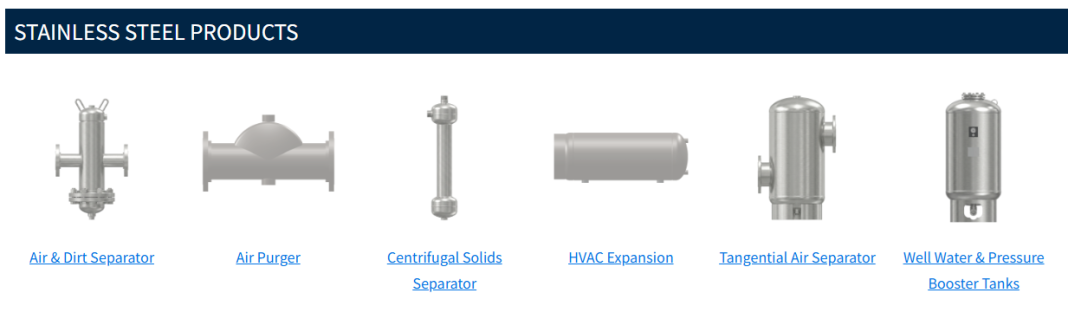
Wessels Company offers passivation options across our stainless-steel product lines, including expansion tanks, thermal energy storage vessels, and air-dirt separators. In addition, some sourcing partners offer ferrous-free facilities to prevent cross-contamination. For more information on custom stainless steel vessel options or to request a quote, visit westank.com or call our headquarters at 317-888-9800.